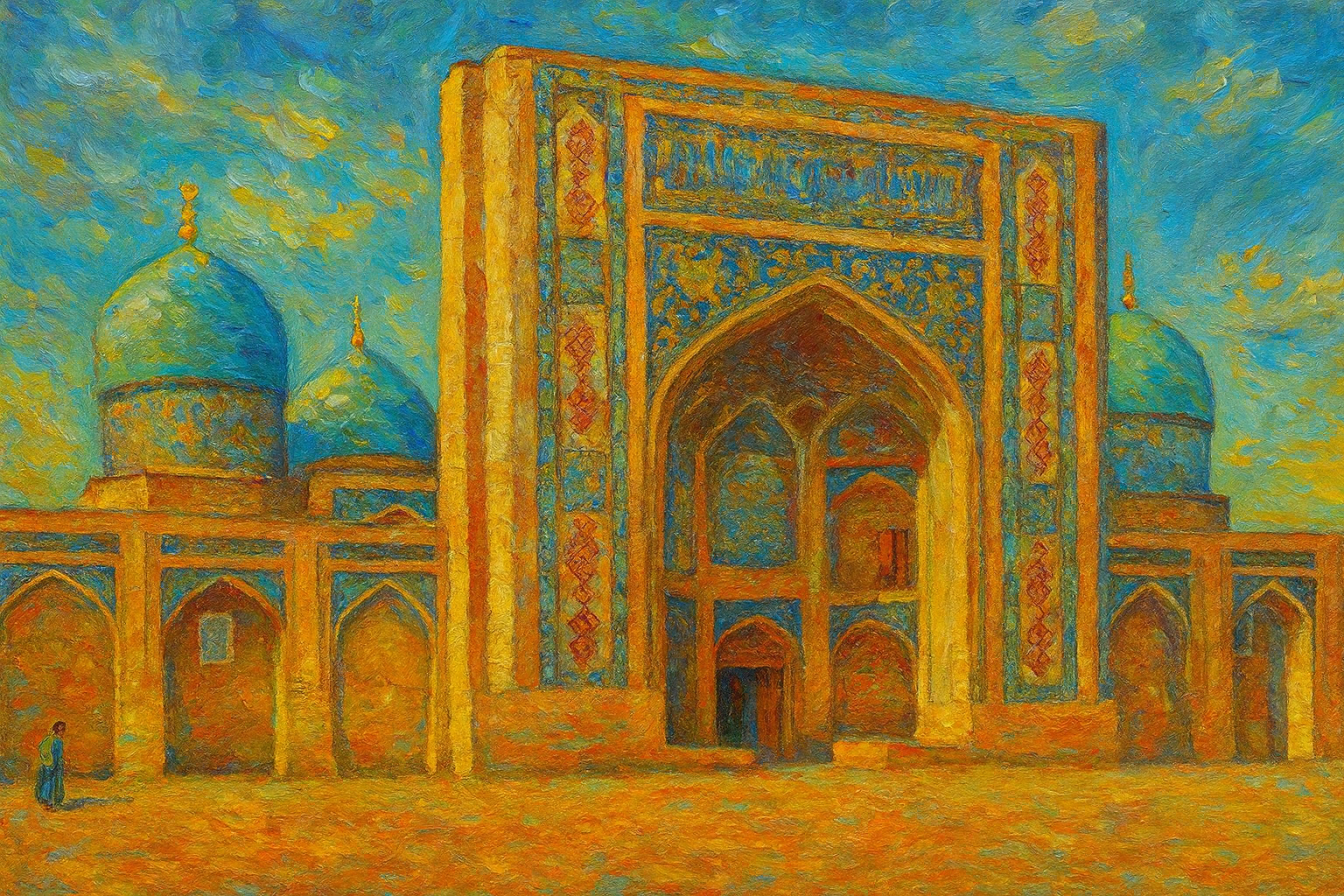
Khast Imam Complex
The Khast Imam Complex sits at the heart of Tashkent as a serene center of Islamic heritage. Its restored madrasas, mosques, and the Muyi Mubarak Library hold the revered Uthman Quran, believed to be the oldest copy in the world. With graceful tilework, tall minarets, and peaceful courtyards, it remains both a place of worship and a living center of religious scholarship, offering a deep sense of history and faith.
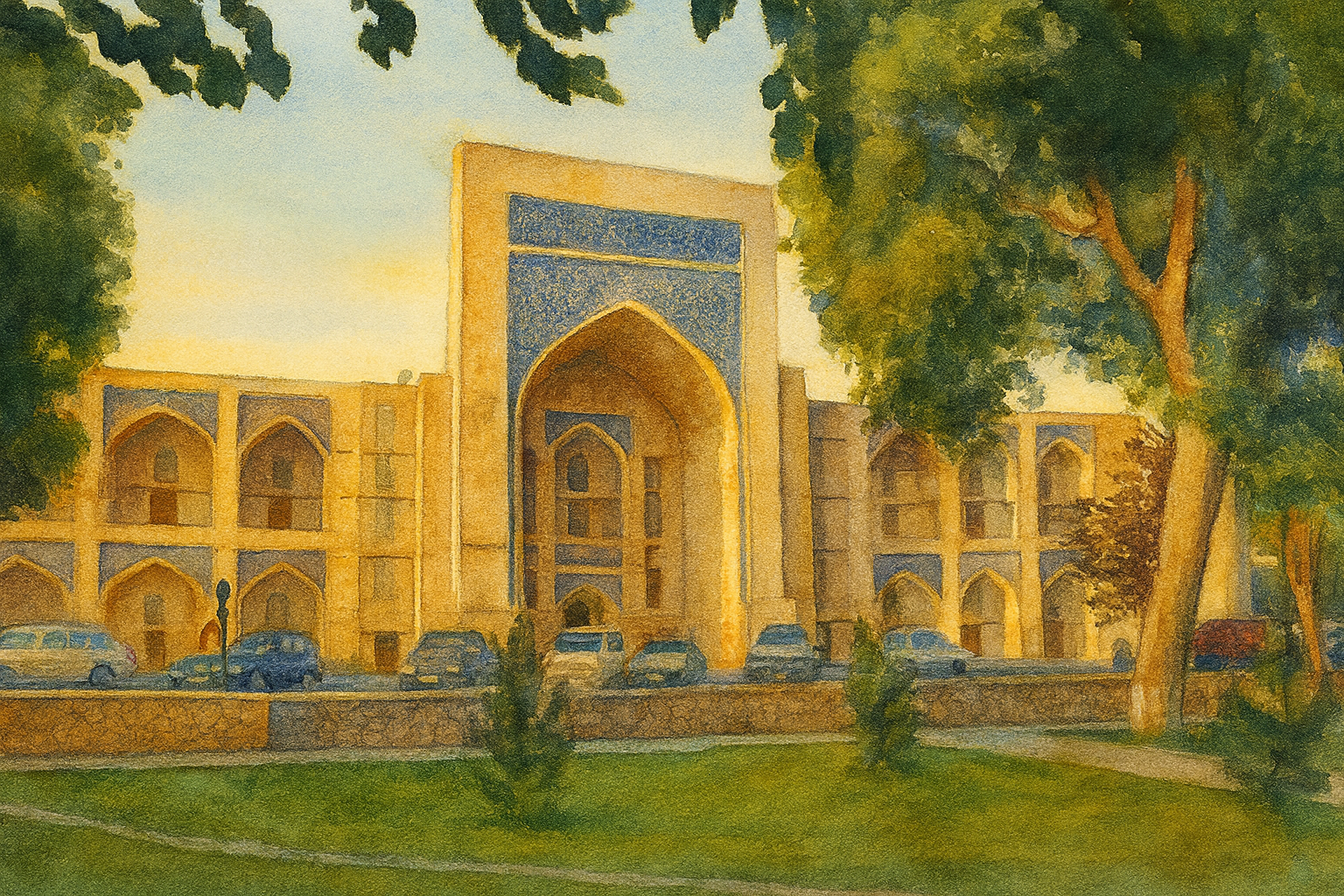
Kukeldash Madrasah
The Kukeldash Madrasah, built in the 16th century in Tashkent’s Old City, is one of Central Asia’s largest and most iconic Islamic schools. Its grand portal, brickwork, and balanced proportions reflect classical Islamic architecture. Once a center of learning, it remains a symbol of the city’s scholarly heritage, linking Tashkent’s historic spirit with its modern cultural life.
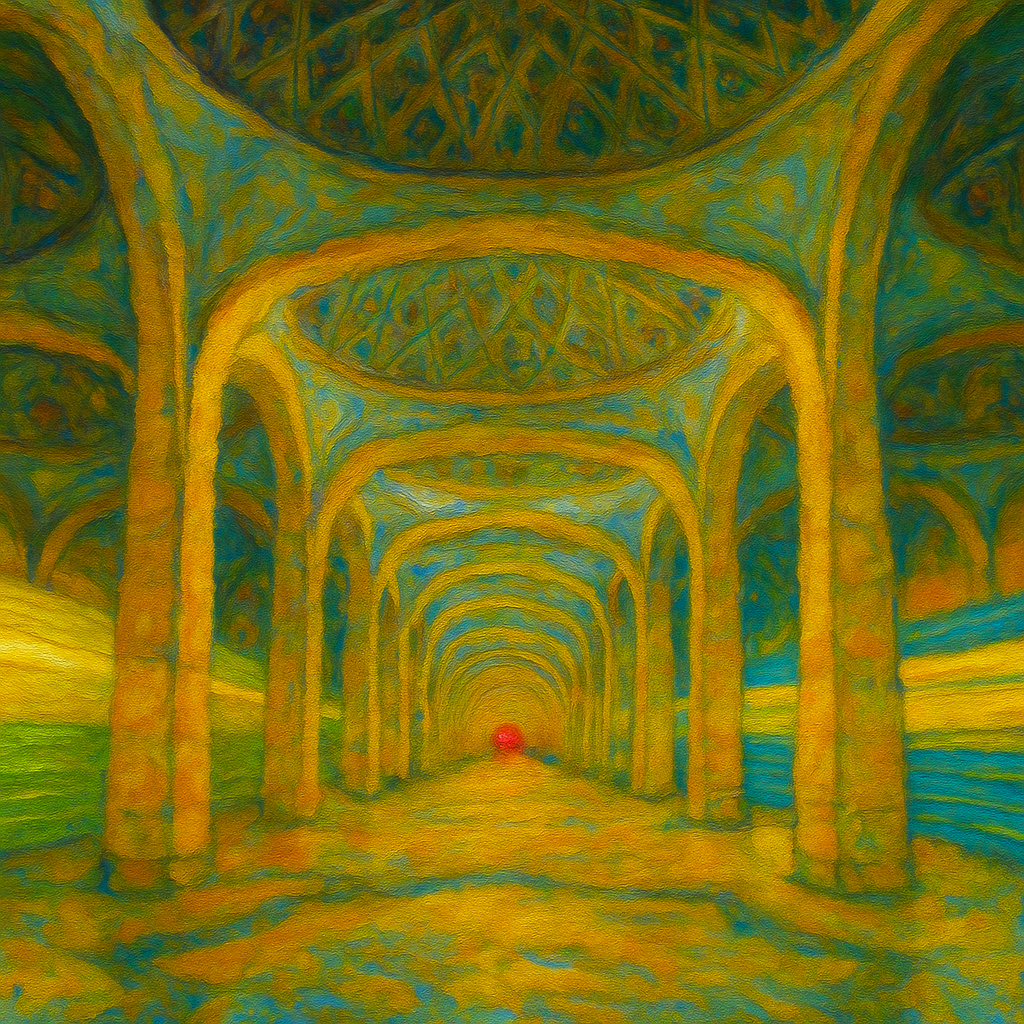
Tashkent Metro
The Tashkent Metro, opened in 1977 as Central Asia’s first subway, is known for its artistic beauty. Each station is uniquely decorated with chandeliers, marble, mosaics, and tilework that reflect Uzbek culture and Soviet-era design. Moving through the metro feels like exploring an underground museum. For lovers of architecture and history, it’s one of Tashkent’s most memorable experiences.
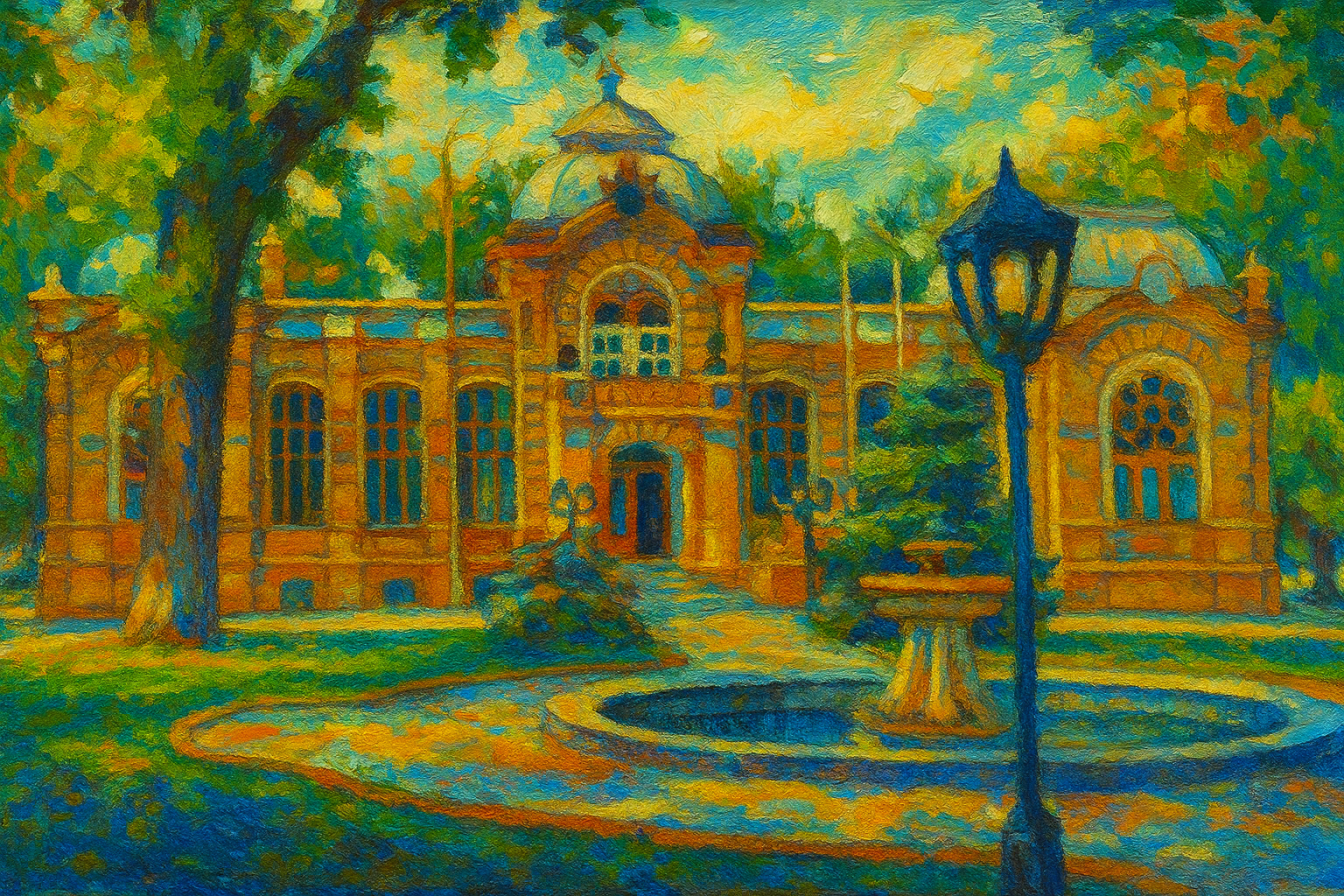
Palace of Grand Duke Romanov
The Romanov Palace, built in the late 19th century for Grand Duke Nikolai Konstantinovich, reflects Tsarist presence in Central Asia. Surrounded by gardens, it blends Russian neoclassical architecture with local design details. Now a museum, it features ornate interiors and historical displays, offering insight into aristocratic life and a lesser-known chapter of Uzbekistan’s past.
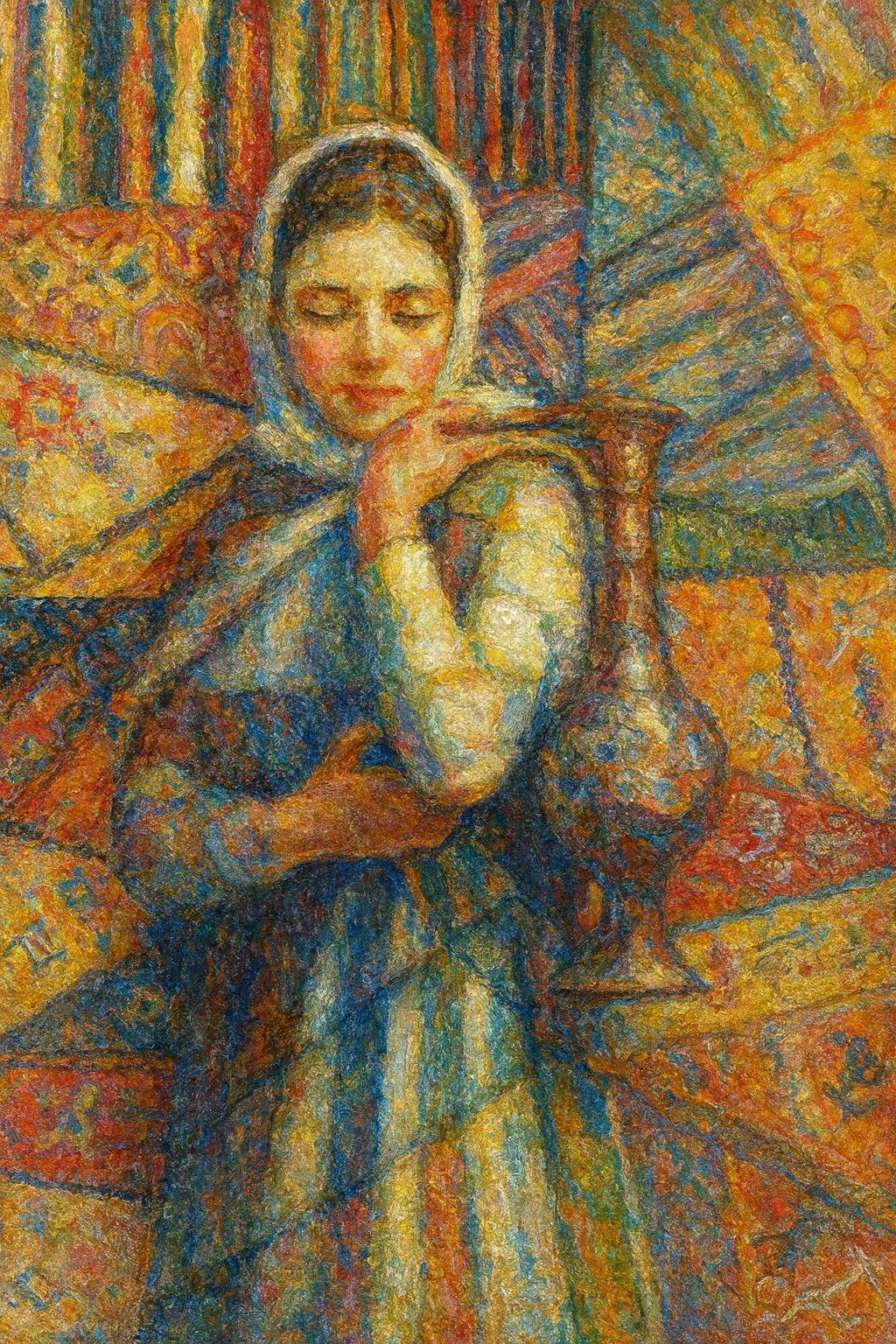
State Museum of Arts of Uzbekistan
The State Museum of Arts of Uzbekistan, founded in 1918, is the country’s leading art museum. Its collection spans ancient Buddhist relics, Islamic miniatures, Russian realist paintings, and contemporary Uzbek art. Visitors can see suzanis, ceramics, and works by artists like Repin and Aivazovsky, alongside modern pieces reflecting post-independence identity. It offers a rich view of Uzbekistan’s artistic heritage.
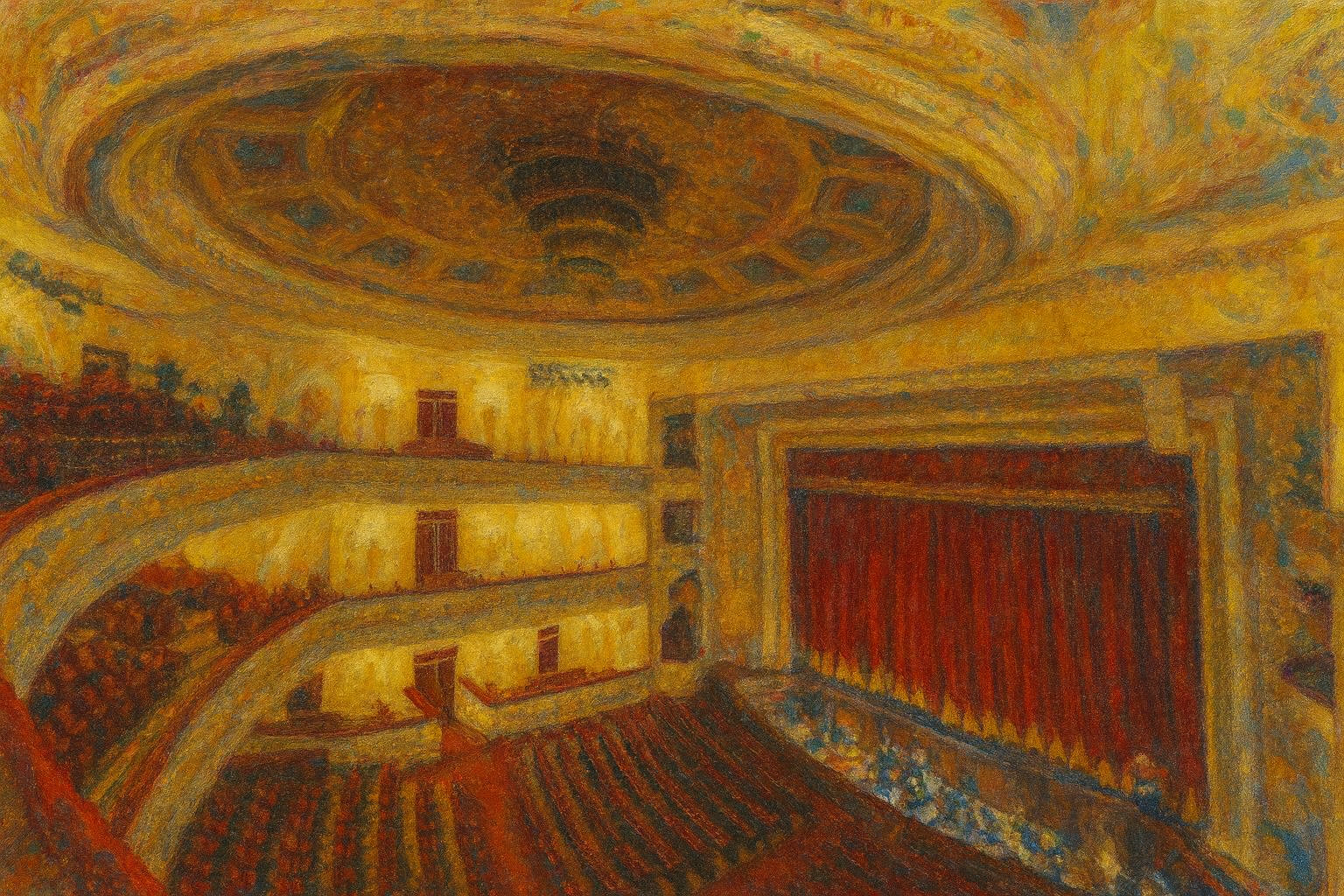
Navoi Theater
The Alisher Navoi Opera & Ballet Theatre, completed in 1947 and designed by Alexey Shchusev, is one of Tashkent’s most iconic cultural landmarks. Built with the craftsmanship of Japanese prisoners of war, it features ornate interiors, chandeliers, and Uzbek motifs. Hosting opera, ballet, and classical music, it blends Western works with local tradition and stands as a proud symbol of Uzbekistan’s artistic heritage.
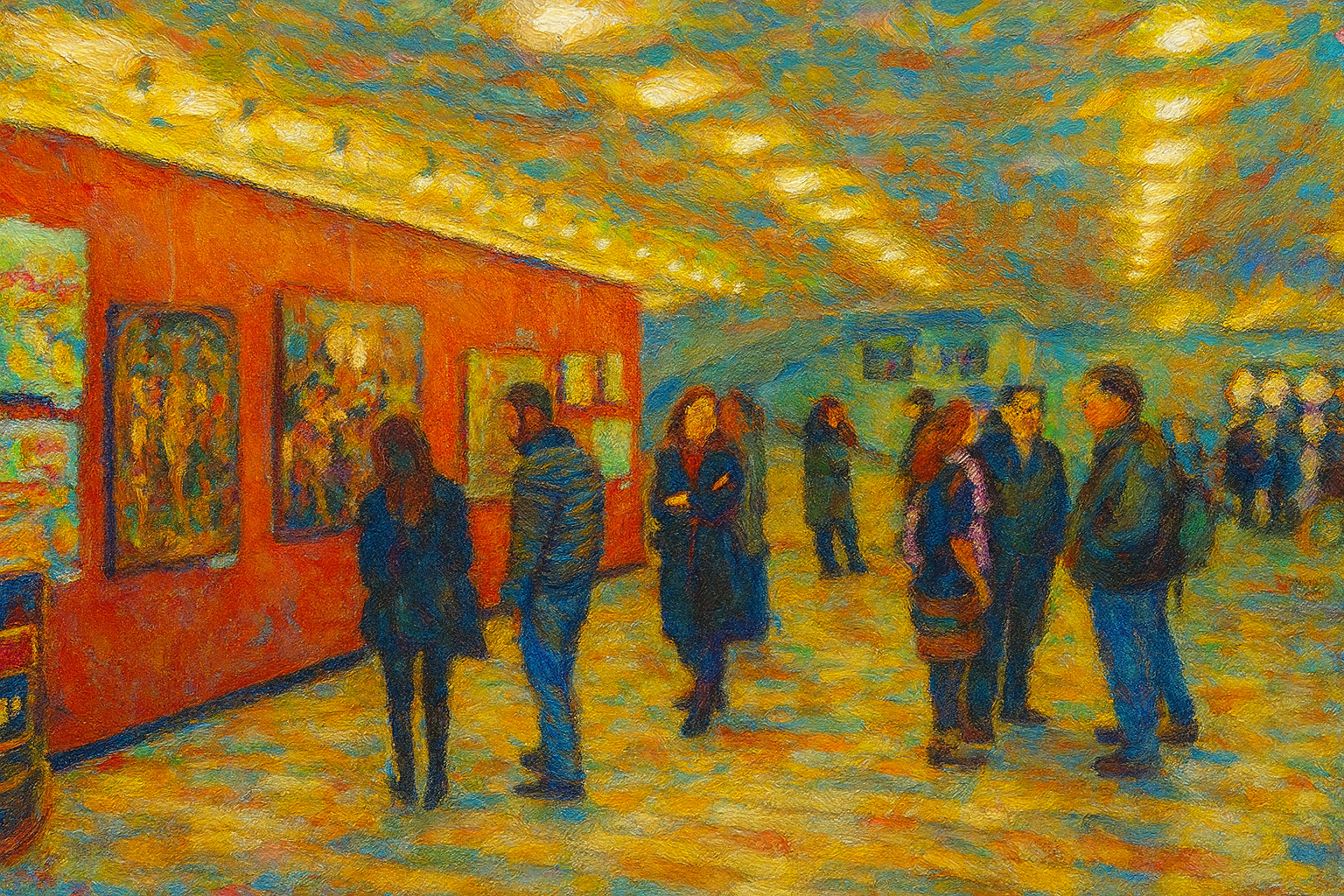
Ilkhom Theater
Founded in 1976 by Mark Weil, Ilkhom Theater was Central Asia’s first independent theater and remains a symbol of artistic freedom in Tashkent. Known for bold, thought-provoking productions, it stages experimental works and modern interpretations of classics that explore identity and society. Also a hub for workshops and festivals, Ilkhom offers a true glimpse into the city’s modern cultural life.
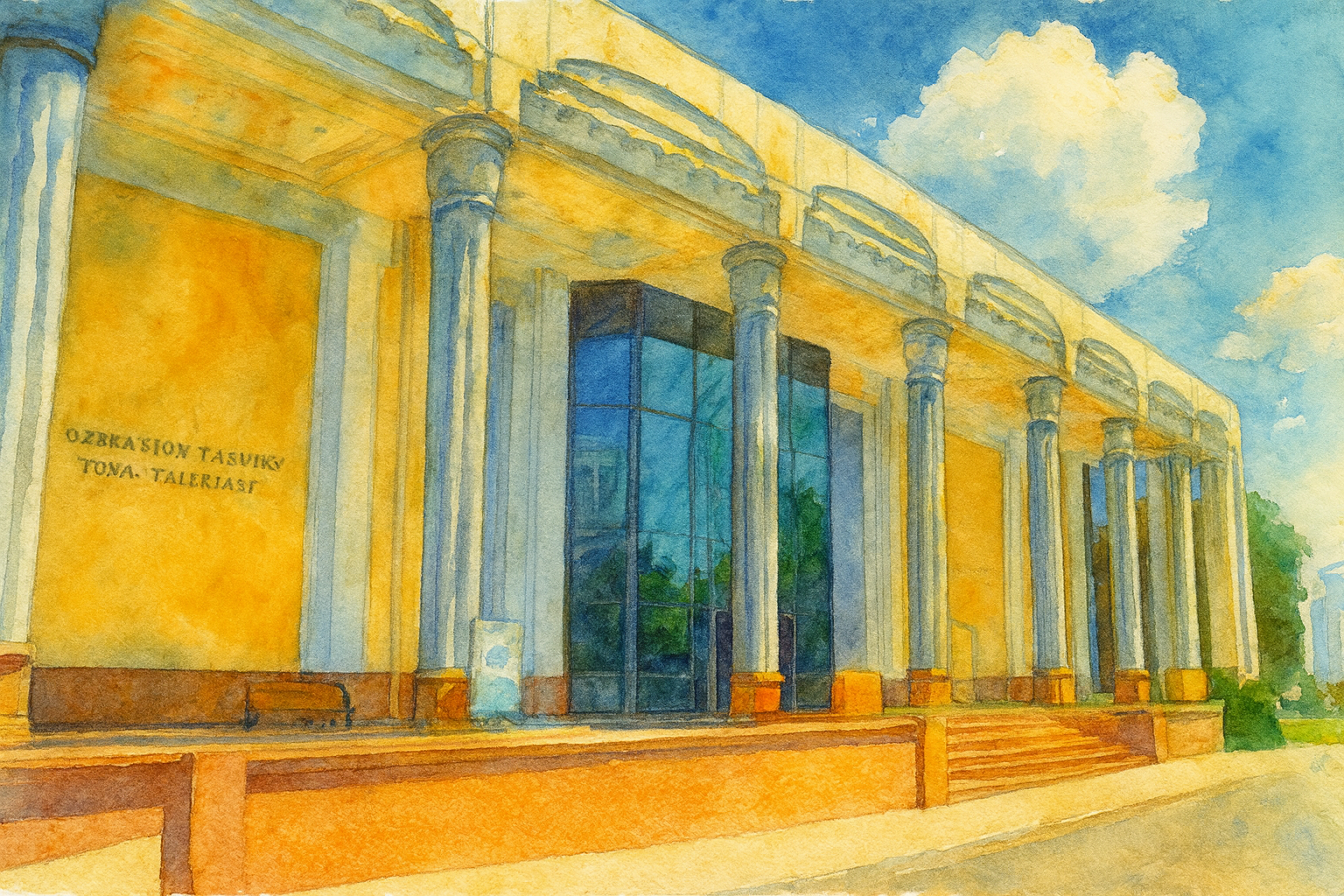
Art Gallery of Uzbekistan
The Art Gallery of Uzbekistan is a modern space focused on contemporary Uzbek art, offering a lively contrast to the country’s classical traditions. Opened in the early 2000s, it features paintings, sculpture, photography, and multimedia works that explore current cultural and social themes. With rotating exhibitions and events, it highlights bold reinterpretations of Uzbek motifs and a forward-looking creative identity.
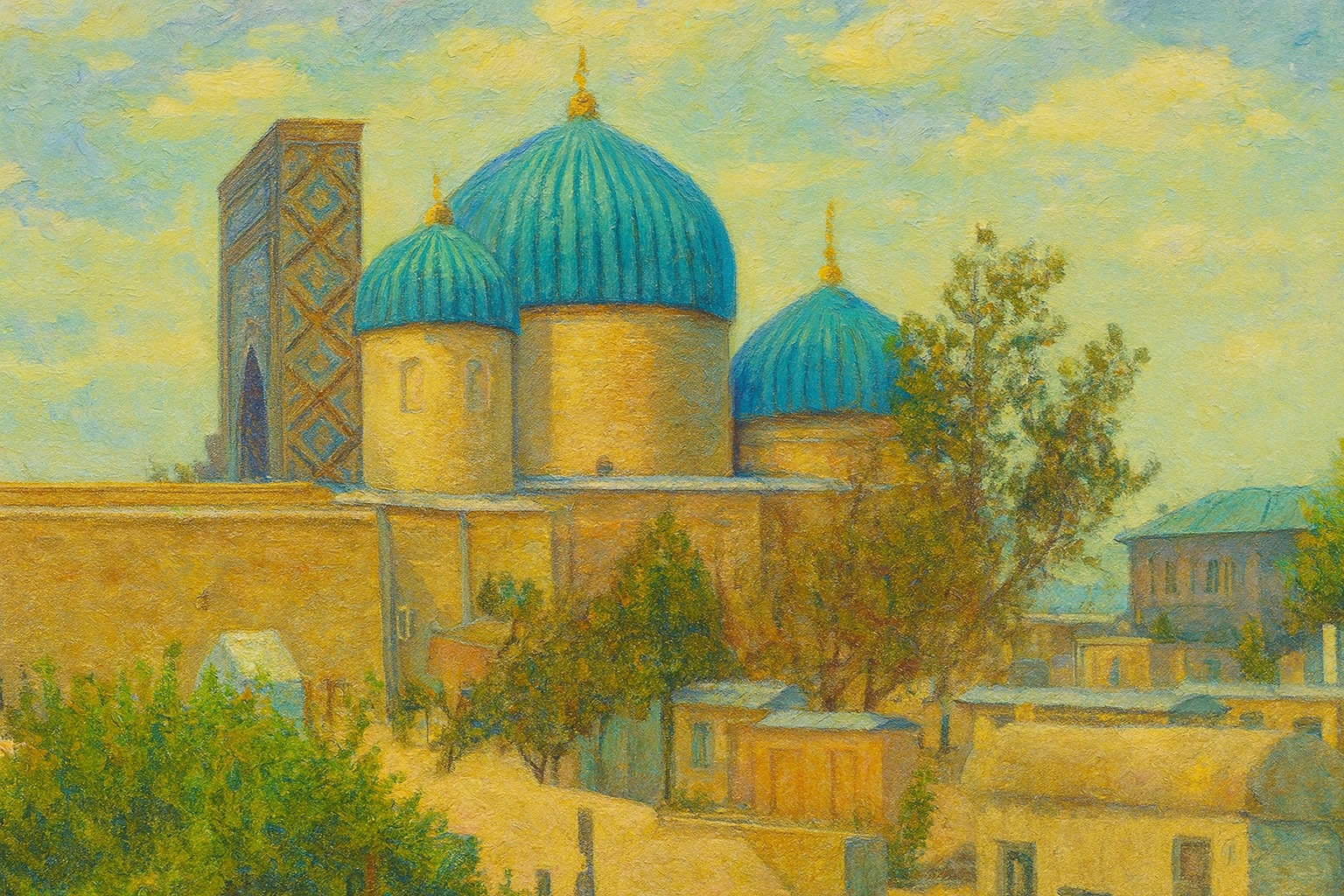
Zangi Ata Complex
The Zangi Ata Complex, just outside Tashkent, honors the 13th-century Sufi saint Zangi Ata and his wife Ambar Bibi. With its restored mausoleum, Friday mosque, and peaceful gardens, it is both a pilgrimage site and a place for quiet reflection. A long-held belief says prayers unanswered at Khoja Ahmad Yasawi’s shrine are fulfilled here, keeping Zangi Ata spiritually significant for centuries.
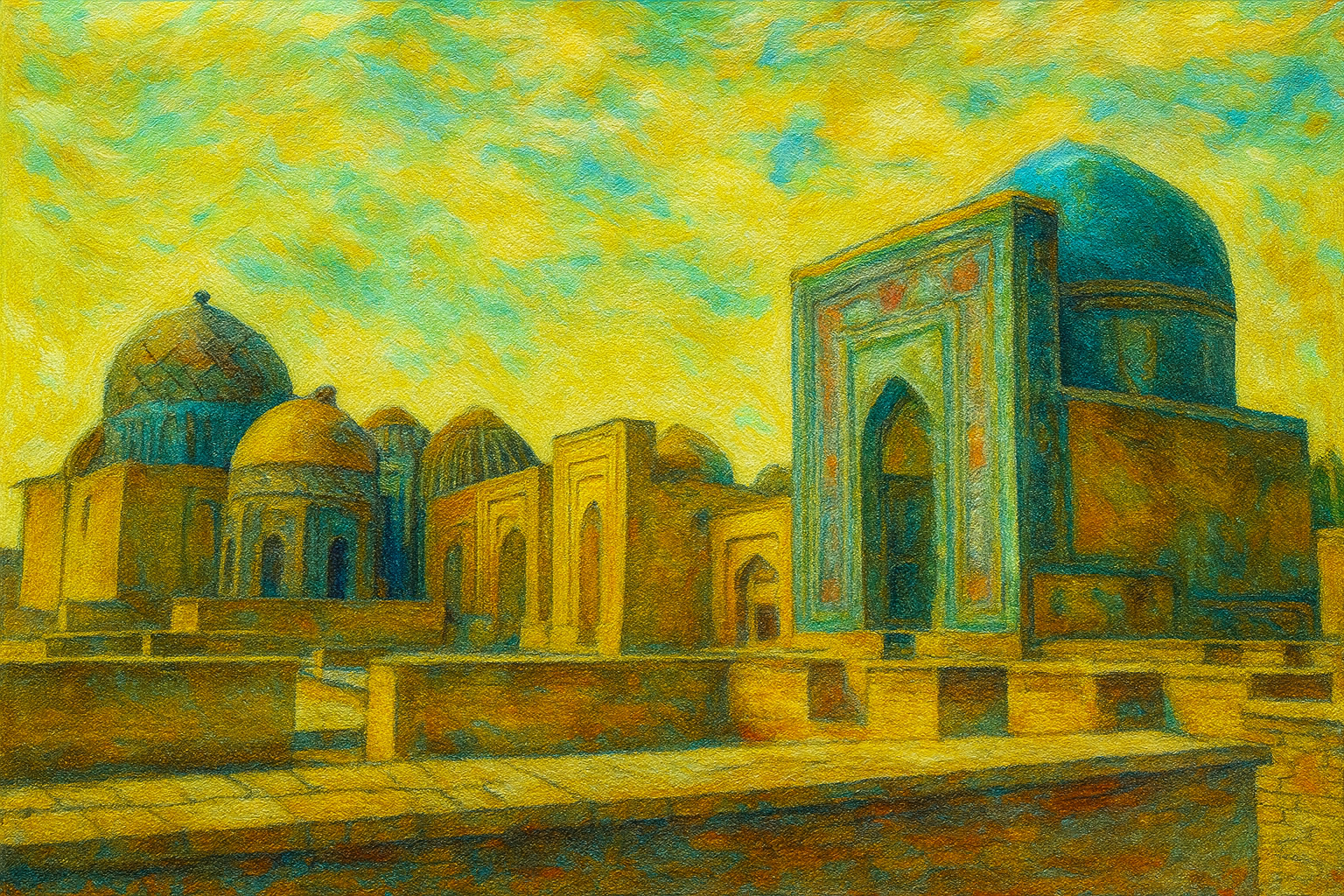
Kaffal Shashi Mausoleum
The Kaffal Shashi Mausoleum honors the 10th-century scholar and Sufi Abu Bakr Muhammad al-Kaffal ash-Shashi. Built in the 16th century, it showcases Timurid architecture with a peaceful courtyard, arches, and fine tilework. Revered for his contributions to Islamic learning, Kaffal Shashi remains an important spiritual figure. Today, the site is an active pilgrimage place for quiet reflection.
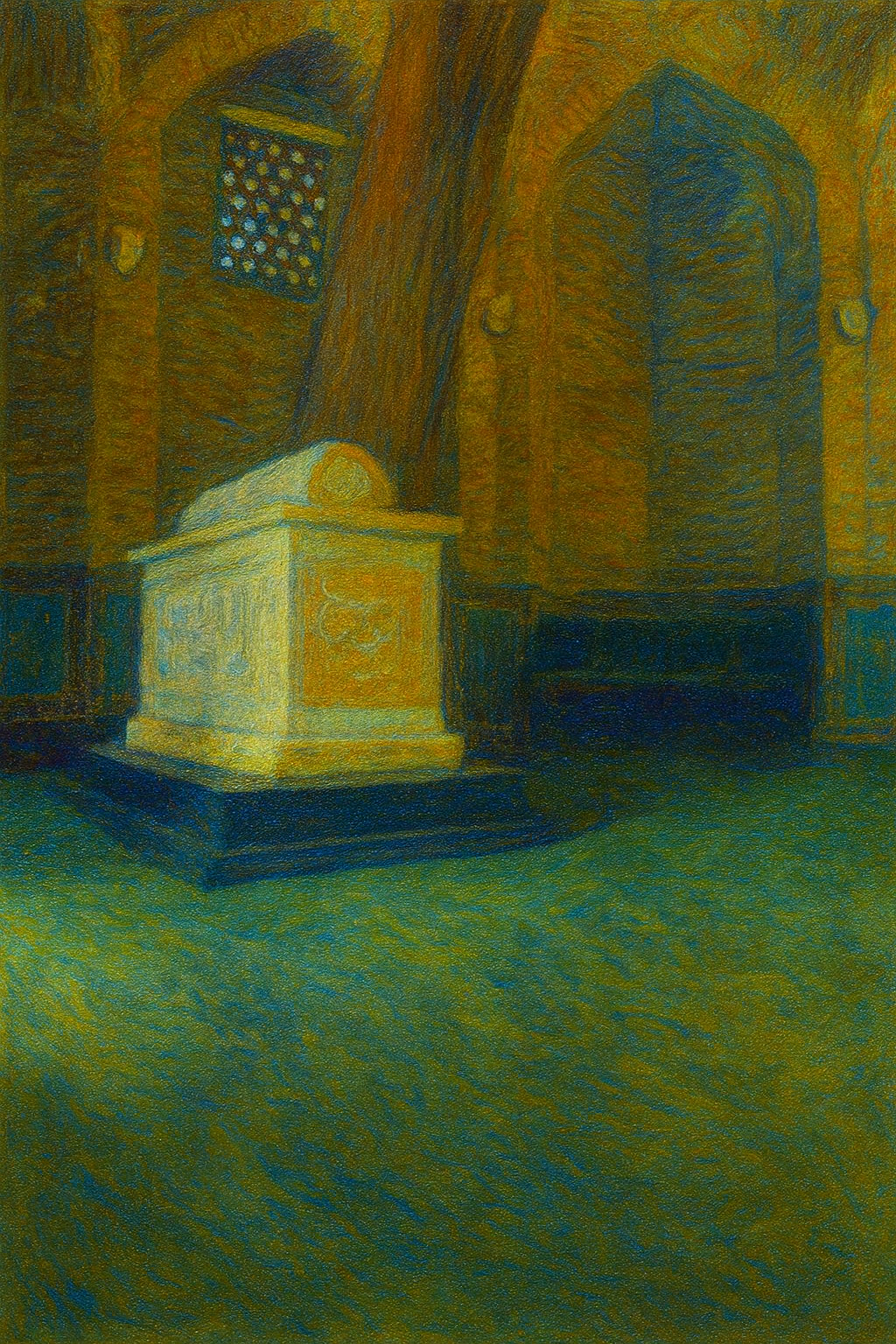
Sheikhantaur Ensemble
The Sheikhantaur Ensemble is a quiet spiritual complex in Tashkent, home to the tombs of Sufi scholars including Sheikh Khovandi Tahur. Dating to the 14th–15th centuries, its simple architecture and ancient sacred trees create an atmosphere of reverence. Less known than other landmarks, it remains an important pilgrimage site and a peaceful sanctuary for reflection and connection to Sufi heritage.
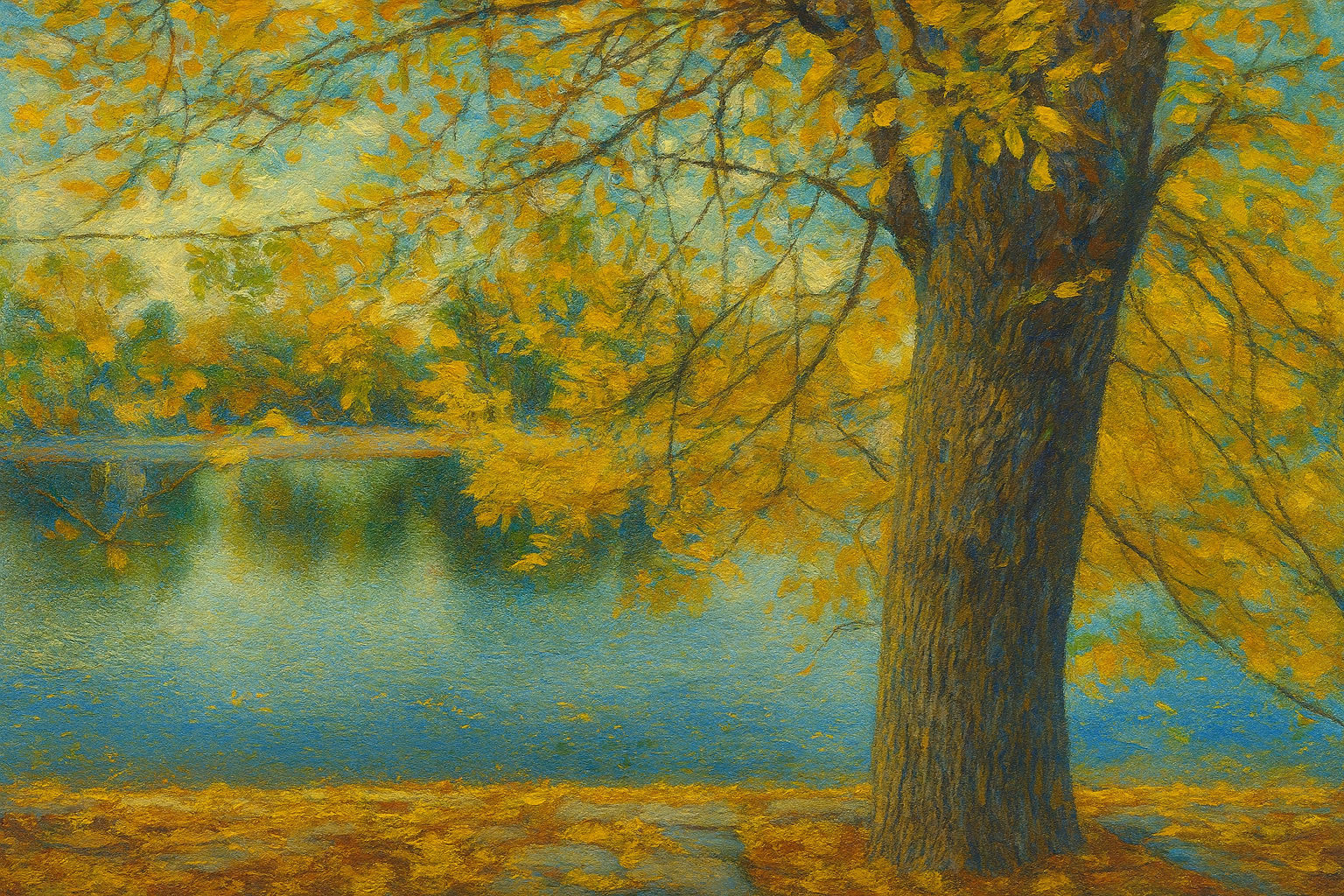
Botanical Garden
The Tashkent Botanical Garden, spanning over 65 hectares, is one of Central Asia’s largest and oldest. It features thousands of plant species from around the world, with zones for medicinal plants, fruit trees, ornamentals, and tropical greenhouses. Quiet paths, seasonal blooms, and shaded spots offer a peaceful escape from the city, making it ideal for relaxed walks, reflection, or picnics.
Japanese Garden
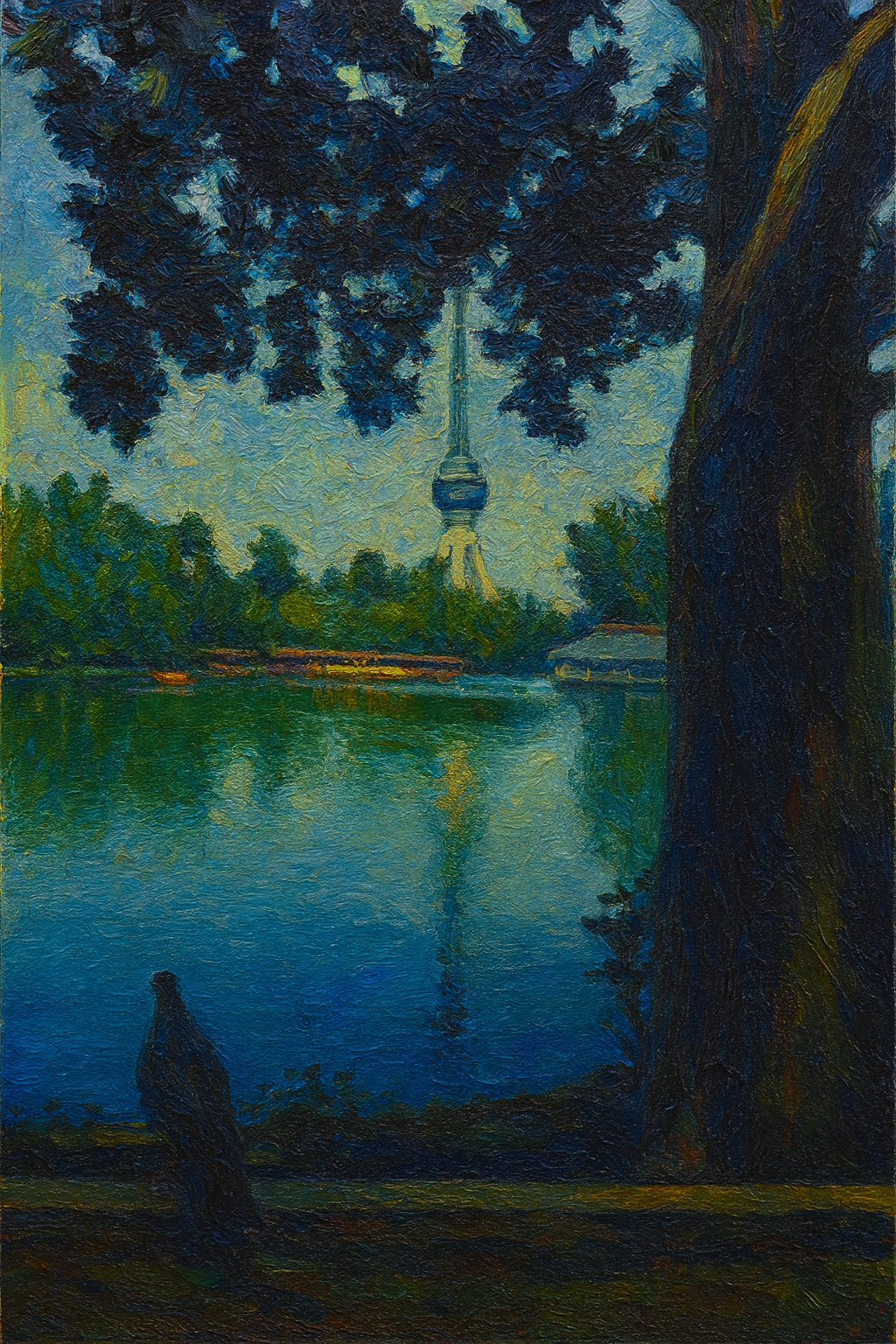
The Japanese Garden in Tashkent is a peaceful retreat near the city center, designed with traditional principles of harmony and simplicity. Centered around a calm lake with koi fish, wooden bridges, pruned pines, and raked gravel, it encourages slow, mindful walking and quiet reflection. Often less crowded than other parks, it’s an ideal spot for meditation, inspiration, or a gentle, relaxing stroll.
TV Tower Observation Deck
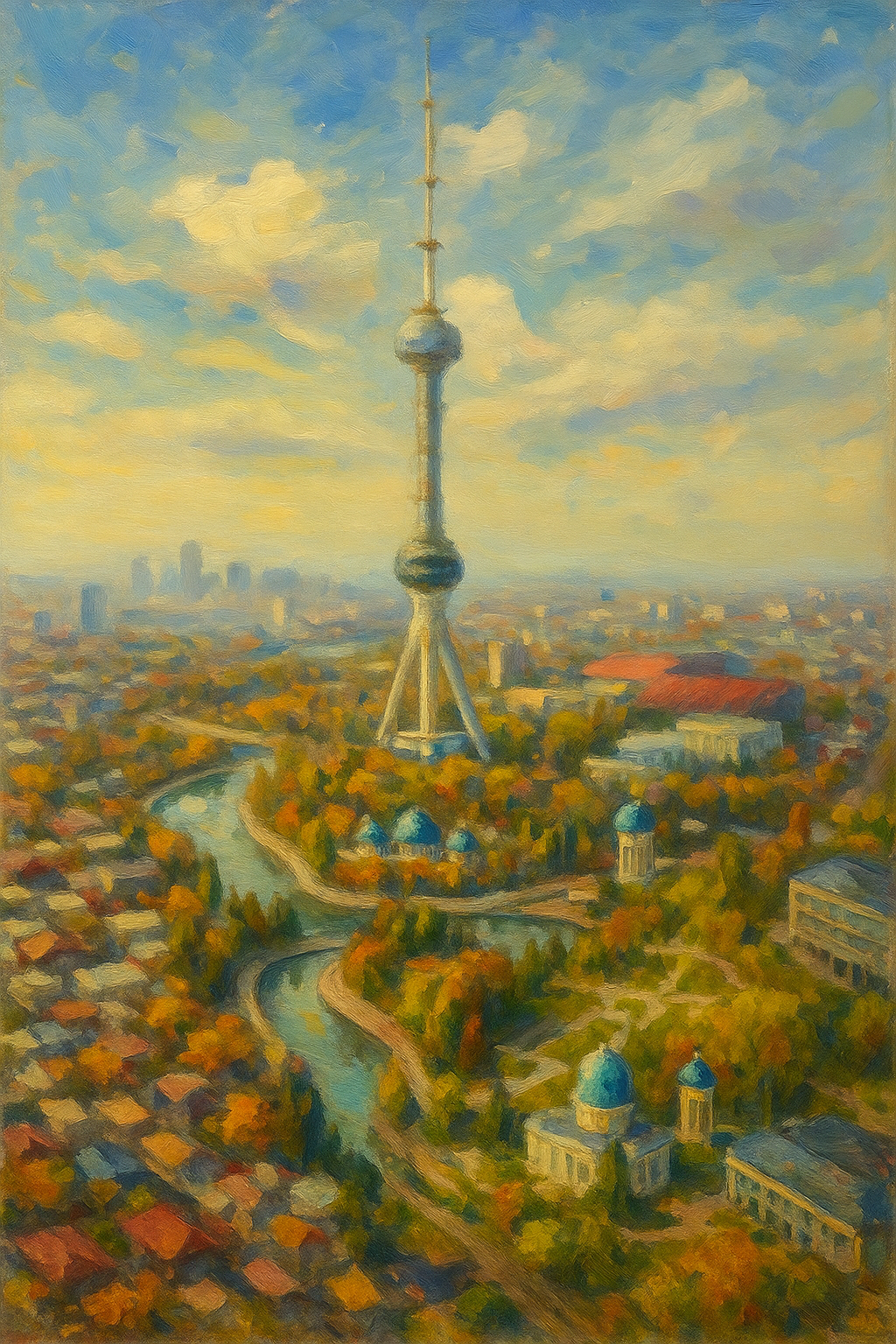
The Tashkent TV Tower, standing 375 meters tall, is the highest structure in Central Asia and a striking city landmark. Its observation deck at 97 meters offers wide views of Tashkent, especially stunning at sunrise or sunset. From above, Soviet-era blocks, modern buildings, tree-lined streets, and distant mountains unfold in quiet contrast. More than a viewpoint, it offers a calm moment of reflection.
Cathedral of the Assumption
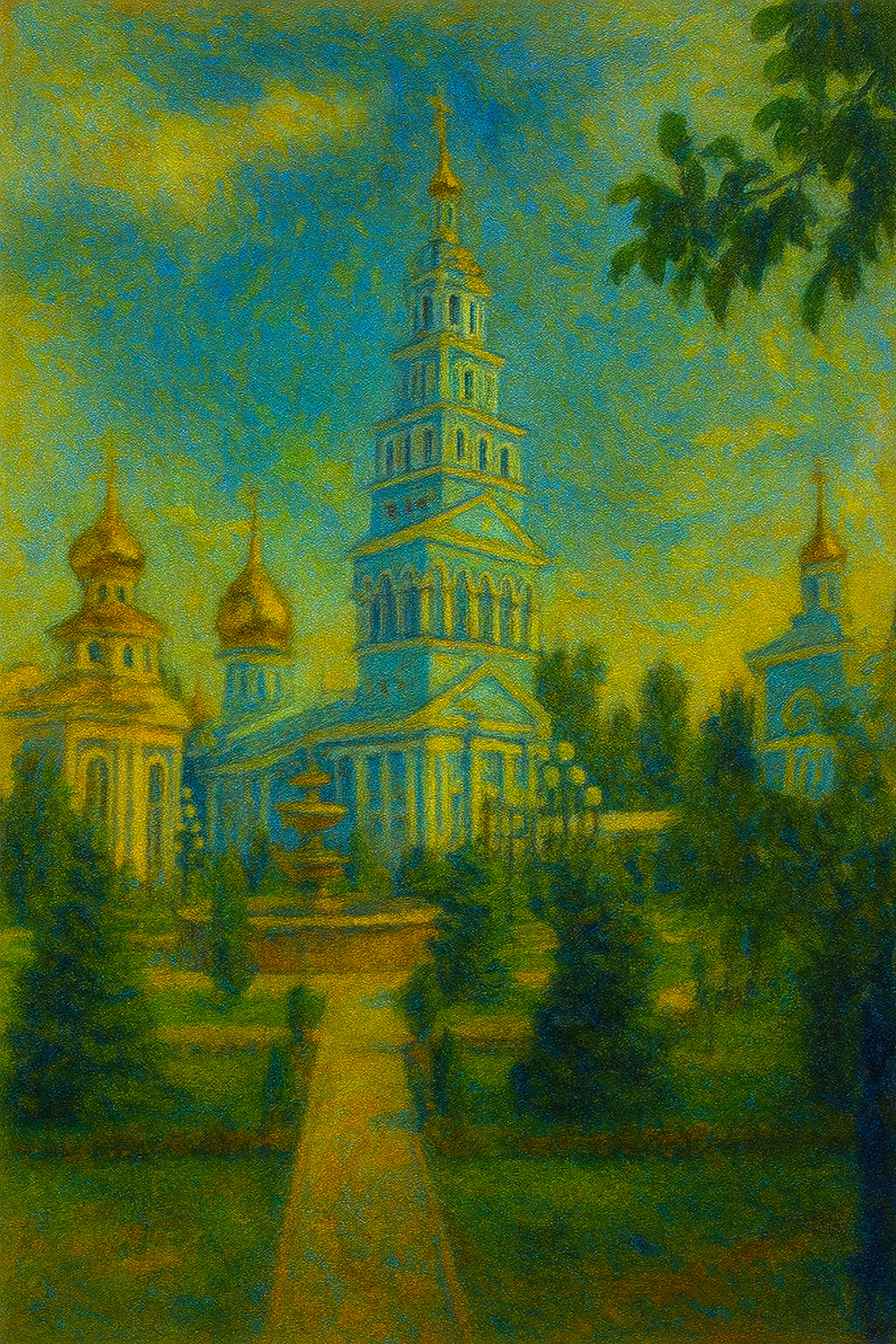
The Cathedral of the Assumption of the Virgin is a peaceful symbol of Orthodox Christianity in central Tashkent. Its soft blue domes, golden crosses, and quiet courtyard create a calming atmosphere. Inside, candlelight, incense, and icons encourage reflection. Open to worshippers and visitors, it offers a gentle reminder of the city’s spiritual diversity and a serene retreat from urban life.